


Visiting Domaine Joël Remy in Burgundy: Classic Wines and Sparkling Surprises
- Brad Steven

- Jun 8, 2018
- 2 min read
I spent an afternoon at Domaine Joël Remy, nestled in Sainte‑Marie‑La‑Blanche, just a few minutes' drive from Beaune. Joël greeted us in the cellar, a tidy space filled with stainless tanks and the welcoming scent of maturing wine. The winery traces its roots back to 1857, when Joël’s ancestors managed a polyculture estate with cows, vines, and cereals. His father converted the operation fully to wine, and Joël formally took over in 1988. Today, the estate spans roughly 12 hectares across appellations like Pommard, Savigny‑lès‑Beaune, Chorey‑lès‑Beaune, Aloxe‑Corton, and Saint‑Aubin

We began with the 2017 Aligoté, a wine that felt fresh and aromatically bright, clean, and a perfect opener. Next, the 2016 Chorey‑lès‑Beaune “Le Grand Saussy” showed maturity and elegance: cherries, 14 months in 25% new oak, with a supple texture. The 2016 Aloxe‑Corton “La Combe” was more structured, high acid, red fruit, and a lean, mineral finish. I love that lean style. The 2016 Pommard “Les Vignots” was the most compelling red: dense, tannic, deeply structured and clearly meant for aging. It was still tight, but the energy and balance made it thrilling.
Then Joël introduced his daughter’s sparkling project: Maison Paul Chollet. In partnership with him and his brother since 2003, the family revived the Maison, which has produced Crémant de Bourgogne since 1955. Under the Paul Chollet label, they craft a range of sparkling wines: Blanc Brut “Les Quatre Saisons,” Blanc de Blancs, Blanc de Noirs, Rosé, Oeil de Perdrix, and even a dry Concerto vintage 2021. The standout was the 2012 Concerto Blanc de Blancs, made from pressed Chardonnay juice and aged six months in old barrels. It felt refined and creamy, with delicate bubbles. A surprising expression of Champagne style elegance in the Côte de Beaune.
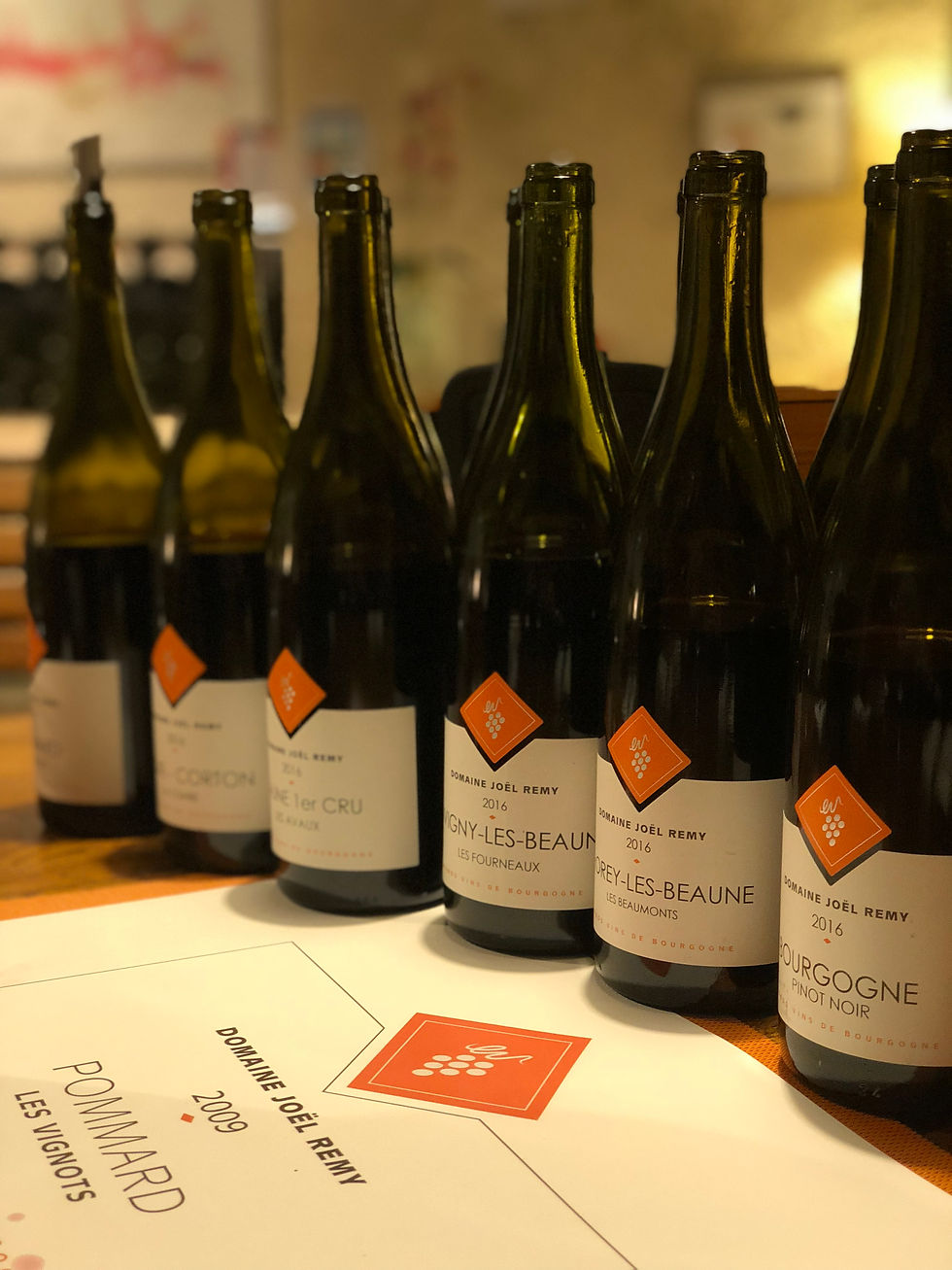
Domaine Joël Remy is unique. Joël is the only full-time grower in his village, yet his wines span a range of terroirs. “Savigny‑lès‑Beaune (Les Fourneaux) gives finesse and depth, while the hillside parcels like Les Beaumonts deliver fruit and a distinctive structure,” he explained, tracing each cuvée back to its origins.
This visit reinforced why Burgundy invites exploration. Here’s a domaine blending generational heritage and evolving style. Classic wines that lean into their identity, and sparkling wines that nod to modernity, all under one roof.


Comments